Showing posts with label Joined-Up Living. Show all posts

Sunday, July 13, 2014

The Greenie's Not (For) Dozing


One day, back in the early 1990s when we were homesteading in the Australian bush, we went to town for supplies. Just before we headed into the hardware store for our latest unglamorous purchase of whatever it was we currently needed in our build-your-own-self-sufficient-mudbrick-house project, I noticed that we had parked immediately behind a very large and very full logging truck, to the back of which was affixed a sticker that said: "Fertilize the bush: 'doze in a greenie."

I remember hoping the cowardly hope that when the logger came back to his truck he would walk around the front of it rather than around the back of ours where the Greenpeace sticker was, in all its rainbow glory. Both vehicles were on a very steep hill, after all, and ours was an awful lot smaller than his.

I made light of it at the time but I do remember well the frisson of fear that I felt when I saw that sticker. Australia is a land of rough humour, to be sure, but there was some real hostility in that message. In fact even more of it than I had suspected, and steadily growing – as witness this blog post from a decade later: http://brianwaltersmelbourne.blogspot.co.uk/2010/08/visiting-licola.html

Fortunately for us, the morning passed without incident. But I found myself remembering it  again today, when several friends posted a story on Facebook about ‘coal rolling’—a particularly unpleasant tactic the Neanderthal inhabitants of some nether regions of the USA are now using to intimidate anyone they suspect of being a ‘greenie,’ which they seem to think includes anyone whose politics might be significantly to the left of theirs.

Back then, when our dreams were new and shiny and we really did believe we could head off total environmental disaster by reducing the size of our own eco-footprint and encouraging others to do likewise, an incident like that one with the log truck caused only a small, temporary shadow over the day. Once we had driven out of town again we could even enjoy the humour of it. For deep down we still believed that commonsense and eco-awareness would eventually triumph over small-minded self-interest. After all, we could empathize with the plight of the loggers who felt their livelihood being threatened. Many of them had families, some with young children. We realized how hard it must be for them to see beyond that to the bigger picture and to understand that the health and welfare of any individual life form in an ecosystem, whether it be a logger’s newborn son or a newly-hatched sparrow, is only ever as good as the health and welfare of the whole ecosystem.

But back then we still believed that governments would see sense eventually, even if it took a while longer than we would have liked. In our naïveté we still believed they had the power to change things and that once the truth dawned on them and the laws of the land starting coming into line with the inexorable laws of Nature, as they surely would, everyone would rally round and work for the wellbeing of our planet and all would be well.

Ha.

I wish I could still believe that. But the shadows that fall over my mornings nowadays –like this morning’s coal-rolling story—are darker and gloomier and last longer.


My way of dealing with them is no longer to rely on a bright dream of a revolution in human consciousness but to face firmly into a future that is adapted to deal with—and somehow to survive—a collapsing economy, a collapsing civilization. And to help save seeds for whatever post-industrial future there might be. And meanwhile, to keep loving and honouring this beautiful Earth. Because we don’t stop loving those we love, even when they are ailing. In fact, when they are ailing, our hearts open to them even wider than before. That can only ever be a Good Thing.

Even an elderly greenie is not willing to be 'dozed in. Neither is this one dozing. Her eyes are wide open and so is her heart. Her sleeves are still rolled up. Whatever the future is—and however much or little of it is left to her—she intends to be fully there for it.


Friday, August 30, 2013

Engaged Elderhood

One day recently, two things that came into my email inbox at the same time set me thinking about the way old age is commonly portrayed in our culture these days. The first was a post by that indomitable blogger, Ronni Bennett, whose 'Time Goes By' blog about aging is read and relished by hundreds of people every day. In this post, headed 'An Old Age Better Than I Ever Expected,' Ronni wrote: "I never expected to feel as alive and vibrant and spirited and vital as I do at this time of my life." She was remarking about something that many of us have often said and felt but probably don't proclaim loudly and publicly and frequently enough, i.e. the discovery that elderhood has the potential to be one of the most enjoyable and satisfying of all life's stages.

Why should we expect it to be otherwise? Well, as Ronni goes on to say: "There is little if anything in our culture that would lead me to believe I would feel this good about being an old woman. The media relate to old age almost entirely via health, poor health - and mostly about dementia."

And she's right. The awful image so commonly presented by the media seems to be that once you finally give up the (obviously futile) effort to 'stay forever young', all that is left is just a slow countdown to death. Old age is portrayed as a time of sharp physical and mental decline, withdrawal from the world, misery, illness, incontinence, loneliness, incapacity, feebleness and dementia.

Which brings me to the second item in my mailbox. It was a helpful suggestion that since I edit a newsletter for elderwomen and have a website about women and aging I might like to add some links to useful, elder-related websites about...yes, you guessed it: illness, medication, incontinence, incapacity, dementia...

What the writer seemed not to have noticed was that my books, websites, newsletters—and sometimes this blog—are all focused on the hundred and one far more important aspects of this section of our life journey: our attitudes, our feelings and experiences, the role of elders in the community, the culture and the world, our personal and spiritual growth...and so on. Not on indigestion remedies.

Yes, for sure if we can no longer walk upstairs we may need to install a stair lift, but if so we simply Google 'stair lifts,' read some reviews and do some comparison shopping, just like we do for every other major purchase. We may want to find out more about prescription drug side-effects but the Internet is full of info about those (and also full of good advice about how to live healthily and drug free at any age). Why on Earth should I want to fill up my links page with info about the relative merits of various brands of incontinence pads just because my readers are all over fifty?

As William Thomas says in his brilliant book What Are Old People For? getting old does often necessitate a search for work-arounds that enable us to keep functioning optimally—in fact he sees elders as walking advertisements for the wonderful human capacity for endless adaptability. This ongoing process of adaptation to each change in the ever-changing body doesn't begin at 44 with the first pair of reading glasses however. It begins in toddlerhood, with shoes to protect our tender feet, bibs to catch the drool, high chairs to keep us from falling on to the floor and pull-up pants for toilet training. It continues through orthodontic appliances, tampons and nursing bras, dental crowns and hiking poles and all the way through to Zimmer frames. Humans are clever animals and we have become really good at finding ways to augment our bodies' functions and deal with their impairments and inconveniences. But these logistics of our lives are not what defines them. It is meaning that defines them. It is meaning that gets us up in the morning and meaning that makes our hearts sing.

Rather than being preoccupied with what we are losing, the key to an old age full of meaning is to look at what we are gaining and also at what we are giving. As Jung taught us, the second half of life is about individuation, about growing fully into our potential selves. And it is about sharing with the world the fruits of our personal harvest. Elders, rather than withdrawing from the world outside their skins are at their happiest and most fulfilled when they are engaged with that world. I call this 'engaged elderhood.' Our beleaguered planet, right now, needs all the engaged elders it can get.

So if there is anyone out there who dreads getting old and really does believe that old age is nothing but dyspepsia, aching joints and damp knickers, let me assure you that it doesn't have to be like that at all. Honestly. And if you don't believe me, read Elderwoman. Or, if you are male, pre-order this great new book by my friend Alan Heeks called Out of the Woods: A Guide to Life for Men Over 50. Alan's book is due for publication on September 19 and can be pre-ordered now from the author's website in the UK or from Amazon in the US.


Tuesday, October 16, 2012

As Plain As the Nose On Your Face

I wouldn't have the courage to leap out of a capsule 23 miles up, that's for sure. Hell, I could never even pluck up courage to leap off the high diving board. But one thing I do envy our culture's latest daredevil hero for and that's the chance to see the Earth from that incredible height, to get a greater sense of its curvature, its wholeness, its planet-ness. And to feel in his body, for four whole minutes and at a greater intensity than ever before, that deep strong pull homewards that we know as gravity.

One of the first astronauts to see our Earth from space spoke fervently about his feeling of identification with it. Just as we may see a photo of our own house, our own street, our own town and say "Ah, there's home," he suddenly realized that he was seeing, through the porthole of his spacecraft, the only home that humans have ever known. And exhilarating though that moment was—he said later that it changed his whole life—one can only imagine the profound sense of relief he and his companions felt when their feet eventually touched solid ground again.

Most of us never get further up than 40,000 feet and even then we are more likely to be watching movies, reading in-flight magazines or waiting for the drinks trolley to reach us than we are to be marvelling at our (somewhat) expanded view of the landscape. And millions of our fellow humans have never been inside a plane. However, the concept of flight, the concept of travel, even on a train or in a car, plays tricks with our minds. In fact, just our very ability to move from place to place on foot rather than being rooted in one spot for life, like a tree, gives us a false idea of who and what we are.

We talk about being on the Earth, as though anyone except Neil Armstrong has ever actually been on anything else. Religious people sometimes talk about being 'stewards' of the Earth, as though our planet hadn't managed perfectly well for millions of years before we turned up, a few cosmic seconds ago, to be its self-appointed 'stewards.' We talk about 'Mother Earth' and ourselves as her children, but most children grow up and leave home and that is one thing we cannot do. Nor would we want to.

We have no difficulty in seeing rocks and mountains, sand and sea, rivers and stones as being an intrinsic part of the fabric of our planet. Even plants, we can imagine as part of that fabric, since apart from tumbleweeds they mostly stay where they are. But moving creatures, the ones with feet and hooves and wings and manufactured wheels, those seem different to our literal, childlike minds and it takes a leap of intellect—a leap that many people seem unwilling or unable to take—to understand, to really get it, that we, too, are just as much a part of the Earth as a mountain, a pebble or a mushroom. The molecules and atoms we are made of have been here since the Big Bang and the energy forces that formed those molecules and atoms were here even before that, part of a vast mysterious universe that is beyond the grasp of our finite minds. 

Yes, it is an intellectual leap, but it is a leap worth making because it is a leap that can change your life. Some people can go even further than that and are able, even if only for a few seconds at a time, actually to experience that oneness and have a total knowing and bodily feeling of it that is way beyond all thought or concept. I long for the day when we can all do that. 

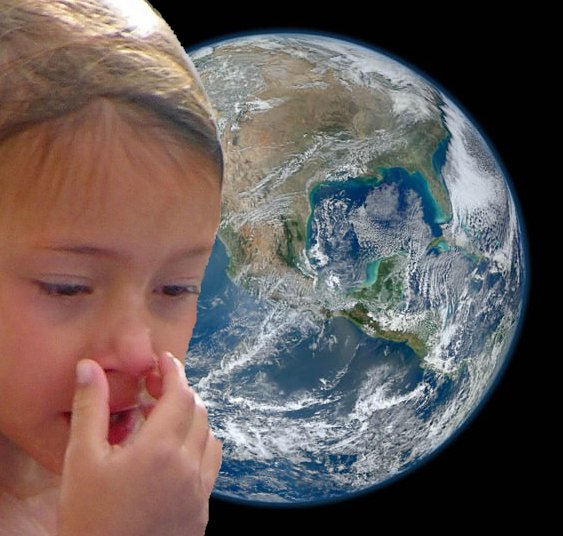
I want to say to everyone: you are part of this planet in the same way that your nose is part of your face. Yes, theoretically you could chop your nose off and hurl it out into space, beyond the sky, beyond gravity's pull…


But why would you ever want to?

Monday, January 30, 2012

All Our Relations


Have you noticed how so many of the ways that we talk about Nature and about our fellow creatures drive a semantic wedge between ‘it’ and us, between ‘them’ and us? So much so, in fact, that it is quite a challenge to talk about other life forms without falling into the trap of separating ourselves from them with our words.

There is absolutely no doubt whatsoever that our species Homo sapiens is a member of the Kingdom called Animalia (we are animals), the Phylum Chordata (we have spines), the Subphylum: Vertebrata (a special sort of spines), the Class: Mammalia (we suckle our young), the Order: Primates (along with apes, and monkeys), the Family: Hominidae (one of the so-called ‘great apes’) and the Genus: Homo (men and women, boys and girls). Yet to listen to the way we speak about ourselves—and the way we think about ourselves—you would never know it.

After all these centuries of imagining ourselves as separate from the rest of the animal kingdom and forgetting that all of these other life forms are our relations, our language has been shaped by our beliefs. So yes, it is hard to avoid the linguistic traps. But I really wish we could all try harder. It really bothers me when I hear people say “humans and animals,” as though we weren’t animals. We need to reverse the trend and re-shape our language to fit our new realization of who we really are—one organism among the billions that make up the body of the living Earth.

It bothers me when I hear phrases like “walking in Nature,” as though there were any place on our planet were Nature isn’t. Nature is us. Nature is in us and everywhere and in everything. Even in the heart of the city, Nature is not just the pigeons and rats and cockroaches and mice and the slivers of living green that grow up in the cracks between the paving stones, but all-pervasive. The air is full of unseen creatures; our own bodies have other creatures living on and within them, creatures in their millions. We are Nature and Nature is us.

For all of my adult life I have consciously and delightedly revelled in the experience of being woman, being human, being animal. So when Stephanie Sorrell, one of my fellow authors at John Hunt Publishing, told me she was thinking of co-ordinating a new publishing imprint called ‘Animal’ I was delighted. If any of my readers are interested in Stephanie’s proposal, you will find it here.


So if you have a book in you and it is about other animals and our relationships with them, contact Stephanie. The email address, in case you can't read it very well in the box,  is animalpub(at)hotmail.com (just replace (at) with the @ sign)

Tuesday, December 13, 2011

My Solstice Message

Like most other children, I loved Christmas. I loved the mystery and magic of it, the scent of pine needles, the gifts, the food, the carols and of course the story. And like most other parents, I wanted my children to have the same experience. But in between my own childhood Christmases and my children’s childhood Christmases there was a very big gap: a gap of fifteen years and half a planet.

Oh I did all the same things that my mother had done and my grandmother had done: dressing the tree, hanging the decorations, wrapping the gifts, stuffing the turkey…and I made sure that the magic of Christmas was there for my children, just as it had been for me. It was—or so they tell me. However, it was not the same magic. Because by the time I had children I had relocated from one side of the globe to the other. So my children’s experience of Christmastime was not just the tree and the gifts and the rich food, it was also sunshine, blue skies and long, lazy days on the beach or at the local swimming pool.

It took me a long time to work out exactly why, as the years went by, I found myself disliking Christmas and wishing it did not have to happen. It was only when a friend of mine—an expert on symbolism—pointed out to me that almost all the traditional rituals we had taken with us from Europe to the Antipodes derived from ancient ways of celebrating the winter solstice— the promise of light returning to a dark, winter Earth—that my reaction suddenly made sense. Out there, in the blazing sunshine on the longest day of the year, why would I want to be lighting candles, stringing tinsel, hanging up stars, bringing in an evergreen tree…all those symbolic ways of honouring a midwinter moment?

Every year, I would hear various Australian friends talking about the irony of sending each other cards covered in snow and holly and eating rich, winter food when even the sparrows and mynah birds were wilting in the midsummer heat. “Let’s do it differently next year” they used to say, and everyone would nod and agree. Yet the old ways persisted. It seemed to me that there remained a deep disconnect between the migrants from Europe and the land in which they now moved. I felt it myself. The traditions and rituals we had grown up with didn’t work there but we all seemed incapable of devising new ones appropriate to the place and the season. To do so would require the kind of deep rootedness in the land from which rituals emerge organically, but the roots of many Europeans in Australia are still in the pots they arrived in. It may take centuries for the transplants to be complete.

By the time I came back to live in the Northern Hemisphere—and eventually, in retirement, to my native land—the over-advertised, stressful, jangly consumerfest that Christmas had become had no meaning or interest for me whatsoever. It now felt like something to avoid. At first, I felt like some kind of Scrooge, half guilty for not sharing what for others was still a joy. But as time went on that feeling dropped away, leaving me free to enjoy my own reality and seek my own sources of delight.

Nowadays, my partner and I quietly celebrate the winter solstice in our own small but meaningful ways—a meditative walk in the wintry woods, a glass of wine, a special, simple vegetarian meal at which we give thanks for the miracle of life within and around us, our deep and joyful belongingness to Earth and our faith that the days will once again lengthen and the sun will eventually return, as it does every year, to bathe and warm us with its rays.

What a joy it is to be free to choose. To be free of what the Russian writer Vadim Zeland—author of the much-acclaimed Reality Transurfing series of books—calls a ‘pendulum,’ a force field of communal energy that draws people into its embrace and traps them there. Over the years, dozens of people have told me they dislike Christmas…even dread it. Yet for one reason or another, they remain caught in the energy pendulum that Christmas has become.

This is one of the glorious freedoms we have discovered in our old age: the freedom, finally, to walk away from energy pendulums and do things in ways that are meaningful to us, regardless of what the rest of the world does. We don’t judge anyone else for their choices. For those who love to buy presents, send cards, hang baubles on a tree, pull crackers and eat some kind of bird, Christmas remains the magical experience it always was. And that’s great. For those who derive a special meaning and joy from the tale of a baby born in a stable, it is a special and holy time. Likewise for those who honour the traditions of their ancestors through Chanukah or Kwanzaa. For us, what is special and wonderful is that we no longer feel obliged to join in any of it. And we are fortunate in that, as far as we know, nobody judges us for that choice.

So my wish for you, as 2011 draws to a close and a new year begins, is that you will be happy in your choices and take delight in your freedom to choose.

(PS: Here's a great article on a similar topic, with lots of helpful and practical advice)

Monday, August 29, 2011

Future Primitive - an interview

Whenever someone asks me a question about how I see the world or what it is that I care about, my mind blossoms with a million answers. Shaping my response to fit the requirement of the moment is always a difficult task for me.

It is so much easier when I can give the answer in writing, for that gives me time to think, to choose, to employ the exact sequence of words and sentences that will best express my truth. But every now and then I am required to speak ‘off the cuff.’ And this was one such time. In this 47-minute interview with Joanna Harcourt-Smith, which took place a few days ago, I had an opportunity to talk about some of the subjects closest to my heart, especially conscious aging, simple living, green spirituality and the role of the elderwoman.

It was a great privilege to take part in Joanna’s project and I would encourage you to check out the Future Primitive website and download some of the other podcasts she has produced.

Meanwhile, here is mine, complete with all its ‘ums’ and hesitations and hastily-chosen words that the perfectionist writer in me would love to improve upon.

(The bio was taken from my website and is not entirely up to date, as I am no longer secretary of the WFA – my apologies to Tess for that oversight.)


Monday, July 04, 2011

Shoulder High to a Thistle


This morning’s walk takes me through my favourite meadow. It is my favourite because it is one of the few fields around here that really is a meadow in the traditional sense, i.e. several unploughed, undisturbed acres of mixed grasses and wildflowers rather than one of those the ryegrass monocultures so beloved of present day agribusiness.

Right now, as we move into July, the meadow is a wild natural profusion, an effusive, flowering, seeding, jumble of colour, shape, size and texture. Except for the well-trodden footpath that runs through its centre, most of the grasses and flowers that live here are waist-high now.

I stand next to a tall, many-branched thistle plant that is at least a foot taller than I am. Looking around, I can see a dozen more such lofty specimens, each bristling with flowers, some already beginning to go to seed. Could that be why they aspire to such a height, to take advantage of the breeze when the time comes to waft their progeny aloft on thistledown wings? It can’t be just to catch the light that they grow so tall, surely, since the entire meadow is in full sun. But maybe, I think to myself, there is no basis for their decision to keep reaching for the sky except the sheer exuberance of the creative, universal life force that powers them. And I feel the tingling flow of that same energy in my own body as I stand there in the meadow in the morning sunshine, shoulder high to a thistle.

Which, when you think about it, is the sort of relationship in which we ought to see ourselves at all times, we puny humans, compared to the vast plant kingdom on which our very existence depends. In fact, if height were a measure of ultimate importance in the scheme of things, perhaps ankle high would be more accurate. Even that might be to exaggerate our own significance.

If we have any importance, any special role to play in all of this, I think it is, as Brian Swimme suggests in his chapter of GreenSpirit: Path to a New Consciousness, our ability to be amazed. Perhaps my role, right in this moment is merely to stand next to this thistle plant that towers over me and reflect on the wonder, joy and beauty of that and of this beautiful sunny morning in the meadow.

Wednesday, May 25, 2011

Downshifting? Easy Does It!

I am delighted to announce that my new book on downshifting,
Downshifting Made Easy: How to plan for your planet-friendly future is now available for purchase.
It is one of the first six books in the new ‘Made Easy’ series that my publisher, O Books, is launching at 6:00 p.m. on Wednesday June 1st at Watkins Bookstore near Leicester Square in London.
Click here to find out more about the launch. It’s a free event, of course, so if any of my blog readers happen to be around I would love to meet you there.
The aim of the O Books ‘Made Easy’ series is to condense into small, inexpensive and easy-to-read books as much useful information as possible on a wide range of interesting topics.
The aim of Downshifting Made Easy, like that of my book The Lilypad List and so much of my other writing, is to inspire people to live more lightly and joyfully on this beautiful Earth.
In particular, I want to convince my readers of three key things that I have learned from my own experience and from that of many ‘downshifters’ I have met. These are:

- You don’t have to move house in order to downshift to a greener lifestyle

- Downshifting is an inward, spiritual process as well as an outward, practical one

- Once you start downshifting, your life gets steadily more satisfying and more joyful


Please break some (virtual) bubbly against the bows of this little book as it sails down the publishing slipway. And please share this post widely.
Thank you.

Friday, October 01, 2010

This Little Cog Went Walkabout


Today I read blog post about blogging. It was a list entitled
'10 Things Bloggers Should Not Do'.
Item #6 was: You Must Not Fail To Update Your Blog Regularly.  

Oops! I have sinned, haven’t I? been away from my desk for several weeks. I have been visiting family members, hiking along trails, reading novels, sitting in the sun, playing with grandchildren, reconnecting with old friends, giving talks, selling books…and then travelling all the way home, coping with a head cold and dealing with the backlog of work that built up during my absence. One thing I have not been doing is blogging.

Strange, isn’t it, how we in our culture manage to turn everything we do into a duty, with sets of rules and obligations and schedules? (Who writes these rules? I often wonder. Who is the Grand Master of the world’s bloggers whose word became law? Where are the stone tablets of blogdom kept?)

The things we love doing, just for the sheer joy of doing them, seem so easily to turn into ‘musts’ and ‘oughts’ and ‘shoulds’ and ‘have tos’. They get swallowed up in the great, busy, bustling, non-stop world of commerce and communication, just as cottage industries once got swallowed up in the Industrial Revolution.
In fact it is a kind of industrial revolution. Industry is our ruling paradigm, here in the West. The factory and its machines and the way they work: reliable, steady, monotonous, turning our widgets at so many per hour from dawn till dusk – or better still, around the clock – have become the measure of all things.

European settlers in places like Australia and New Guinea were baffled and frustrated when their local workers turned up every morning for weeks and then disappeared for days on end for no apparent reason. The aboriginal concept of ‘going walkabout’ was—and probably still remains—totally incomprehensible to the Western industrial mind. (You want to work for me? OK, you report for duty every day of the year except for the miserable couple of weeks of annual leave I’m obliged to give you. Thank goodness my machines don’t ask for time off. If they break I replace them immediately.)

So pervasive is this way of thinking that we expect ourselves to be machines too. We demand reliability, predictability, regularity. We treat our bodies as though they were motor cars, expecting them to perform for us on command, in the same way, every day, no matter what.

This is particularly hard on women, whose juices and energy wax and wane with the moon and who are often forced to try and combine their childbearing with earning a living. It is particularly hard on young children whose biology did not equip them to spend all day trapped at desks, learning about abstract things that for the most part they cannot explore and touch and interact with. It is particularly hard on elders, whose perceived value seems to follow the 'blue book’ principle, whereas elders are in fact much more like wine. Their wisdom grows and matures and becomes more valuable to their communities with every year they remain on Earth.

Well I am not a machine. And I refuse to remain a cog in anyone else’s. I’m retired, out to pasture, doing my own thing. I blog when I really want to, when I have something I really want or need to say. And if that means I am a Bad Blogger, well so be it. Some days I would rather be quiet and walk in the woods or work in the garden or read a book. Sometimes I need to leave my desk and wander far and wide. I need to go walkabout. It’s good for the soul. I can recommend it.

Thursday, August 12, 2010

Close Quarters

My blog tour is over and I am home. It was intended to last another week or two, but I decided it was time to stop. Somehow, it felt finished.


This time of year, in my corner of rural England, the vegetation along the lanes has reached its peak. The succession of white is nearing its end. First came the frothy heads of sheep’s parsley, then the sturdier, cow parsnips, then—the white deepening into cream—came the strange, wonderfully-scented meadowsweet. Now even that is past its fullness, dying back, going to seed.

I never see this roadside profusion without remembering Vic.

Vic lived in the village where I spent the latter half of my childhood. He could neither read nor write but he could play, accurately and flawlessly on his piano accordion, any tune you cared to suggest. He carried in his pocket a scrap of paper with his name printed on it in large, block capitals. If ever he needed to sign something he would unfold the piece of paper and carefully, laboriously, copy out the letters.

Vic did odd jobs for our family, and in breaks we would sit and chat and he would tell his tales of local lore and the ways of wildlife.

He also worked for the local council, trimming the roadside vegetation with a hand-held sickle. So he was always outside and his skin was tanned like a leather shoe. I can see him now, his broad, brown face split by a wide smile as I passed him on my bicycle. I can see him with that sickle, deftly trimming back the stems that had begun to hang over into the lane. He always seemed content in the work of his hands and the slow pace of his days.

Trimming back vegetation is a job best done at close quarters, the way he did it. But any day now, with the nesting season pretty well over, a large, noisy, smelly machine will rumble down our lane, its blades held close against the hedge, ripping indiscriminately into everything it passes and leaving ugly gashes in the bark of trees.

Our machines make short work of many tasks. But for everything they give us, they take away more. I know it’s no good trying to return to a life long past, but I’m convinced that we can find slower, more careful, safer, greener alternatives to many of the things we do that are so thoughtlessly—and rapidly—destroying beauty, diversity and ecosystems. We need to build an entirely new infrastructure, based this time on renewable energy, on local economies, on bioregional identities, on that wonderful maxim of ‘thinking globally/acting locally.’ And in doing so, combine the best of the new technology, such as the Internet, with the best of the old, re-skilling ourselves in some of the tasks that people have forgotten to do, such as darning socks and baking bread … and wielding a sickle.

This is why, in Part III of the new book, GreenSpirit: Path to a New Consciousness, I have drawn together experts from some of the major institutions of our culture—medicine, law, economics, education and so on—to talk about the many ways in which this new thinking can be translated into practice.

The old world—Vic’s world—is gone. The new one is being created, brick by brick, person by person, moment by moment. For where consciousness leads, matter will follow. Keep the faith.

PS: If you haven't bought your copy of the new book yet, and you are in the UK, click here to get it from GreenSpirit Books for £10.75. If you are in the USA, here is the link to the Amazon page. And in Australia, it's in stock now at Angus & Robertson. If anyone is having difficulty obtaining a copy, just contact me and let me know.

Friday, July 09, 2010

Today’s topic: ‘Sacred Messiness’


As I said yesterday, this is a busy week, with two visits in quick succession. Today, thanks to my friend Tess Giles, I am making a guest appearance on a wonderful site called, ‘Anchors and Masts.’ This is a blog that focuses on learning and growth in the context of spirituality and creativity, and my post for today is entitled ‘Sacred Messiness’. You will find it at:
http://www.anchormast.com/2010/07/09/sacred-messiness-2/

Saturday, June 26, 2010

GreenSpirit Book Tour, Stop #3: 'The Madeleine Syndrome'

Alison Shaffer’s blog, ‘Meadowsweet and Myrrh’ is “…for the whispering poet and enchanted naturalist that dwells within each of us, jostling elbows with the anarchist, the skeptic, the cynic, the scientist, the self-deprecating intellectual and the humble, earnest seeker.”

Alison writes for a Druid Journal called 'Sky Earth Sea: A Journal of Practical Spirituality' and she is currently writing a book on paganism and peace.

She is kindly hosting me for the third visit on my ‘virtual book tour.’ I hope you will hop over there and read my latest post.

It is entitled ‘The Madeleine Syndrome’

Tuesday, May 25, 2010

On the Road Again (sort of!)


When my book Elderwoman was first published, I spent several weeks touring around, giving talks and workshops and signing books. It was all very interesting and enjoyable. I met some great people and saw a lot of places I had never seen before. It was also rather tiring and I was glad to get home again. I am an introvert by nature, so frankly I am more comfortable sitting at home in my slippers and sweatpants than I am dressing up and socializing. (I also wondered whether all the effort and expense had really been worth it.)

But now, there is a much better way to tour around. In terms of spreading the word about a new book it is a lot more effective, as it enables an author to introduce the book to many more people than the old-fashioned book tour. It incurs no cost at all. And best of all, you don’t even have to get out of your old, comfy clothes to do it.

It’s called a blog tour.

So as a way of taking the new book GreenSpirit: Path to a New Consciousness out ‘on the road’, I am now embarking on a blog tour. The tour will take me to a number of interesting places over the next few weeks and I would be delighted if you could come along with me, read my blog posts and meet my hosts. In the process, you will, I am sure, discover blogs that are new to you, and if you like them, please bookmark them and come back to them often. I made the first stop today. So please come and meet my first host, Maddy Harland.
Maddy is the editor of Permaculture Magazine: Solutions for Sustainable Living and a co-founder of Permanent Publications, a publishing company specializing in developing our understanding of permaculture. www.permaculture.co.uk
She is also one of the contributors to the new book. Her chapter, which is one of my favourites as it is so comprehensive and practical and also very thought-provoking is entitled: ‘Permaculture: Bringing Wisdom Down to Earth.’
Here is my post on Maddy’s blog. It's called 'The Web of Connections.' And when you have read it, be sure and check out the rest of her blog and bookmark it. It is great.

Tuesday, February 09, 2010

Balancing Act

I’ve become a bit unbalanced of late.
No, I don’t mean that I have been toppling over or that my mental health is any more precarious than it ever was, but that the ratio of time spent sitting at the computer to time spent moving around and doing other things has been steadily shrinking over these past few months. The result: some strong warning signals from my body, including eyestrain and a sore shoulder, forcing me away from my desk. Which is one of the reasons why my blog posts have been sparse (and they were never all that frequent to begin with, as you may have noticed).
I find myself feeling thinking back nostalgically, from time to time, to the early 1990s in Australia when Sky and I were building our own adobe house, making fifty bricks every morning, then turning yesterday’s bricks and stacking the week-old ones.

We planted trees all afternoon and spent almost every waking moment outside except when it was pouring with rain—which in that drought-prone area it very rarely did.
We ate outdoors, showered outdoors, came in only to sleep. Maybe we were unbalanced in the other direction, but it certainly didn’t feel like it at the time. We felt fit and healthy and full of energy. And our little computer that drew its power from a solar panel could only run for an hour or two a day.Human bodies were not designed for a sedentary life. Our species was certainly not designed for a life spent indoors, in airless, climate-controlled houses with fitted carpets and double glazing, eating instant dinners defrosted in microwave ovens. And our children and grandchildren were certainly not meant to spend huge chunks of their days and evenings in front of screens, either passively soaking up commercial propaganda and mindless triviality or vanquishing armies of virtual enemies with their thumbs.

It seems as though we have removed ourselves further and further from any real contact with the Earth. Small wonder, then, that we have wreaked so much mindless havoc. I am not the only one who’s out of balance. Two thirds of us are. And many, worse than me. At least I walk miles every day in the fresh country air, chop wood, grow fruit and vegetables and cook from scratch.

Even so, I have some way to go to get back in balance the way I would really like to be. Which is difficult, since I am a writer and an editor and in this remote, rural area of England where we live it is the Internet that keeps me connected to the wider world. Plus we live in a cold climate and it rains a lot.

Anyone else out there wrestling with a similar dilemma?

Tuesday, September 15, 2009

Turning Green - Another Look


Last year I wrote several posts about ‘turning green’ and why not everybody is doing it yet. But I really believe that more and more people are turning green.

One small indication is that the number of green blogs and websites on the Internet is multiplying so fast, now, that no one person can even attempt to keep up with them all any more.

It is a very good sign indeed. It is as though the revolution we have all been yearning for is finally getting going in earnest.

Mind you, every now and then I still find myself being sucked back into feeling disheartened about things. Things like the rapidly-melting polar ice caps, our lack of progress in curbing CO2 emissions and our corporate culture’s seeming inability to let go of its fantasy of eternal, economic growth and to embrace the goal of global sustainability instead. (If only governments would be bold enough to level the playing field for corporations by imposing limits, then I think a lot of them would start competing to be green. Right now they are all too afraid of losing their market share.)

But whenever I am tempted back into pessimism, I take another look at this wonderfully inspirational video clip of Paul Hawken addressing a Bioneers Conference.


I just love to watch that endlessly scrolling list of organizations working for a green world, for social justice and all the other causes that we ‘Cultural Creatives’ care so much about. There are millions of us. It is important to remember that. We don’t all necessarily care equally about exactly the same things. And we don’t all agree on priorities. But if you were to interview every one of us I am sure you would find a surprisingly huge degree of consensus about the sort of world we are hoping to create. And we are all beavering away, each in his or her own little patch, working in one way or another to bring that about. We are all envisioning a cleaner, greener, more peaceful planet where resources are fairly shared and co-operation is the ruling paradigm.

And I still believe it can and will happen. The signs are everywhere.

(Thanks to Pam Gallagher for the beautiful photo of a regular green visitor to her garden)

Tuesday, June 16, 2009

Welcome to our Garden, Tullio Two.

Fig trees are not something one would normally associate with cool, damp England, even in this milder, south-western part of it where I live. But the gardening catalogue assured me that the Brown Turkey fig grows quite happily here. And I know that to be true because there’s one in the village that yields dozens of ripe figs every year. So I ordered a fig tree. A small one, in a container.

A crazy thing to do of course, given our tiny, already-crowded garden. But there was one warm spot with nothing growing in it. The little fig tree, in its pot, was a perfect fit.

I’ve named it Tullio Two.

Gardening, for me, is not just about growing food. It’s about relationships. Relationships with plants, with the other creatures who share our space and sometimes even with people.

Tullio Zola was a tall, thin, affable, Italian man with sparse grey hair, glasses and impeccably gracious, old-fashioned, European manners. If you had ever enjoyed a bottle of wine with dinner in Melbourne’s elegant Windsor Hotel, it would probably have been Tullio who advised you on the vintage. You would have been well pleased with his choice. Tullio knew his wine. He knew good food. He knew figs, too. In his garden he had a huge, spreading fig tree. Sometimes it would throw up suckers from its extensive roots.

It is said that root suckers don’t always make good trees in their own right. So I had low expectations of the one that Tullio dug up and gave to me in a pot. I stuck it in the ground. But when the Spring came, nothing happened. I decided it was probably dead. Being the lazy gardener that I am, I simply left it there. Another whole year went by and still it sat there, this thin, brown stick, a foot high, doing nothing.

Until, suddenly one day, late in the second Spring, it sprouted a leaf. And then another.

I thought to name it Lazarus, this little thing that had returned from the dead. But instead I called it Tullio in honour of the old man from whose garden it had sprung.

Fifteen years later, when Tullio the man died. I helped to arrange his funeral. Meanwhile, Tullio the tree had been steadily growing bigger and bigger, and every year it produced more and more delicious, juicy figs. Eventually, in order to pick them all, I had to climb up into its branches. What an amazing feeling that was: perching high in the branches of a tree I had known and loved since it was a twelve-inch high stick!

I felt a deep kinship with that tree. So much so that when I left that place for the last time, I found it harder to say goodbye to the tree than I did to the house.

Melbourne’s climate suits figs really well. Devon, England, not so much. But Tullio Two is a Brown Turkey fig and it will survive here. Maybe even thrive. This morning I noticed several new leaves. I think it likes the spot I chose.

I doubt I’ll ever climb it. But I’ll love it. And if it ever gives me ripe figs I will eat them slowly and reverently, like a sacrament. Welcome to our garden, Tullio Two!

Friday, February 13, 2009

Just One Shift


Over breakfast,I was watching a woodpecker on the peanut feeder and thinking about some writing I have to do on sustainability. And that set me pondering on perception.

If you are looking through your binoculars and the images you see are fuzzy, you don’t just keep searching for non-fuzzy images. You adjust your binoculars. The way we look determines what we see – and how clearly we see it. That applies metaphorically too. Perception and attitude influence each other and both determine behaviour. When things look fuzzy, and we can’t see clearly where we are going, it is WE who must make the perceptual shift.

It must have been tremendously discombobulating, back in the 16th century, if you had spent your whole life believing what you were taught about the sun going round the Earth, to be told that no, actually it is the Earth that moves. But in the fullness of time, people came to believe the scientists and adjusted their mental binoculars accordingly.

Sadly, although it became accepted that the Earth revolved around the sun, billions of people believed – and still do – that everything on Earth revolves around human beings and that human beings are the most important creatures on the planet. But important to whom? Well … the plain truth is that humans are important to other humans and to very little else.

There are creatures – bacteria, earthworms, insect pollinators for example – without whom entire ecosystems would totally collapse. If any of those groups went missing, we would all be in dire trouble. But if humans went missing, our absence would have almost no negative effects on anything and a huge number of positive effects, world-wide. So who are the ‘important’ ones?

The truth is that anthropocentrism – the belief that everything revolves around humans and that the planet is just a big pile (a shrinking pile, now) of ‘resources’ for our use – is our death warrant.

The perceptual shift that we all urgently need to make is every bit as significant as the one about the Earth circling the sun. We need to shift from anthropocentric way of seeing to an ecocentric way of seeing. What is really important is not people but ecosystems. So the first step in moving to a sane, sensible and sustainable way of life on this planet is to adjust our mental binoculars from an anthropocentric focus to an ecocentric focus. Just one shift, that’s all it takes. One shift in our way of seeing things. Putting the planet’s needs first, instead of our own.

When we do that, every single thing we look at comes into a sharper focus. And once you can see clearly, it is easy to know the way forward.

Sunday, December 21, 2008

Turning Point


I love the yin/yang symbol. And I love the fact that it describes a dynamic principle. Each half of the pattern contains the seed of the other. Yin contains the kernel of yang, yang contains the kernel of yin. Each seed ripens, enlarges and eventually gives birth to its opposite. I wrote a whole article on that, which you can read here if you are interested. It’s all about balance and how balance of any kind, whether on a personal or planetary scale, is based on this same dynamic principle.

I am writing this at the solstice, as we reach that tiny, still moment when light and dark begin to change places. It is a beautiful moment. Imagine our Earth, as it reaches the Solstice point and just for that tiny moment it touches the limit of its tilt in one direction, pauses for, what? a millisecond? … and then begins its six-month journey towards the other.

Our Earth has reached such a moment in more ways than one. The latest news about the speed and intensity of climate change is such that if we do not act now – right now – to reduce our carbon emissions and to pour all our energies and resources into setting up alternative, clean, green energy systems, there will be no way to halt the processes that will bring an end to our species and most others.

Ever the optimist, I still think we’ll pull it off, even if only by the tiniest, scariest margin. Humans are like that. Push almost always has to come to shove before we act.Remember how, when we were at college, after messing around for weeks we pulled an all-nighter to get a paper written and handed just in time for the deadline? The deadlines of climate change are providing the impetus finally to get us off our backsides and into action.

Not just big actions – billions of tiny ones as well. Billions of small hesitations as we remember the effect of every purchase, every choice we make in our everyday lives and then decide on the greener alternative.

Because the majority of us, I believe, really do care about our world. The spectacular result of the recent US election proves that things are moving, times are changing. A groundswell is happening. I just read, in Orion Magazine, an excellent essay about all this by Auden Schendler, the ‘Sustainability Director’ for a ski resort in Colorado, USA. He says “Climate change doesn’t have to scare us. It can inspire us; it is a singular opportunity to remake society in the image of our greatest dreams.”

Yes. That’s our project. And at this Solstice moment, as we pause to honour the eternal and ever-reversing dance of light and darkness, what better time to remember it?

Wednesday, November 26, 2008

That Other World Wide Web

Economist David Korten commented, six years ago, that the language of economic dysfunction has become so common that when he uses the term “the global suicide economy” in his talks, he doesn’t need to spend much time explaining what he means. For as he says “Most people are now aware that rule by global corporations and financial speculators engaged in the single-minded pursuit of money is destroying communities, cultures, and natural systems everywhere on the planet. Until recently, however, most people responded with polite but resigned skepticism to my message that economic transformation is possible.”

But that is changing. We are starting to wake up to the fact that economic transformation is possible. All it needs is for enough people to believe that it is possible. And to take a step further by acting on that belief. To put Main Street before Wall Street.

Because the way to deal with the global suicide economy is not to try to destroy it – it is so powerful that not even governments can do that. (In fact, they are up to their necks in it). The way to deal with it is to starve it out. Replace it with something healthy. And we can do that. The means to do it are right here, in everybody’s hands, in everybody’s purses, and we can work on it right now, today, every one of us.

All over the globe, there already exists a spider’s web of local enterprises. Farmers’ markets, small businesses, local co-operatives, local tradespeople, village stores, artisans, craftspeople, artists, CSAs (community supported farms), roadside fruit stands … Local economies have been in decline for a long time – probably since the Industrial Revolution – but they are coming back. There is evidence of it everywhere you look, nowadays. I find this really exciting. Another world really is possible.

No matter where we live, every need we have can theoretically be supplied without a penny of our money going directly into the hands of multi-national corporations. Sure, some might find its way there indirectly. (Our local dressmaker may have bought her thread from Wal-Mart). But that’s OK. We can't accomplish everything at once. What we are speaking of here is just the first step. Think local. Buy local. Support local. Even if it costs more money. (It only costs more money because the global suicide economy hides the true cost of its products, i.e. the cost to the planet). Anyway, it will only cost more money in the short-term. Eventually, it will be cheaper. And even if, right now, it costs a bit more money, is it not worth it, for the Earth’s sake? For the sake of all life?

If you live in an area where there simply are no local alternatives whatsoever to the global suicide economy, well at least you can avoid supporting the worst offenders. Click here for a list of companies NOT to buy from – and why. (Some of the entries may surprise you).

But if you can, even if only in part, try to buy local. The more we support Main Street instead of Wall Street, the thicker and sturdier that web of local enterprise becomes. And the stronger it gets, the faster the global suicide economy will wither. The wealth that right now flows into the pockets of greedy CEOs needs to be redirected into the pockets of the people who truly deserve it – the people in our own localities who are working to supply the needs of their communities.

True wealth, David Korten points out, is “… a sense of belonging, contribution, beauty, joy, relationship, and spiritual connection. … a world of locally rooted living economies that meet the material needs of all people everywhere, while providing meaning, building community, and connecting us to a place on the Earth.”

That’s the world author Arudhati Roy was referring to when she said: “Another world is not only possible, she is on her way. On a quiet day, I can hear her breathing.”

Monday, June 16, 2008

The Words for Honeysuckle

It is mid-June, and along with the foxgloves and campions and the froth of white cow parsley, there is honeysuckle everywhere. Its scent fills the lanes. Every morning walk I take is a feast for the nose as well as for the eyes.

The honeysuckle bloomed early this year. On the first day of the month I noticed it already in flower in several places. Excited by my discovery, I was looking forward to getting home and sharing the news.

A few moments later, I saw a pleasant-looking couple coming around the corner, striding briskly towards me in in their hiking boots, knapsacks on their backs, almost certainly heading for the Coast Path that runs along the clifftops close to here. They smiled as we drew close. And as is the custom in these parts, wished me a polite "Good morning". I responded in kind, adding eagerly that it was a lovely morning and "Look, the honeysuckle is already coming out, just up there."

The man and woman had not broken their stride till then, so were almost past me before they paused and the man said "I beg your pardon?"

I re-burbled my happy news item. At which they smiled again, albeit tentatively, nodded slightly and went on their way.

Only after I was well around the next corner did it dawn on me that they obviously had not understood a word. And only then did I connect that with the careful, phrase-book English of the "Good morning" and the "I beg your pardon?"

As I walked on, I began to think about how easily I could have conveyed the message about the honeysuckle in a just a few simple, wordless gestures: my hand as an unfolding flower, held to the nose, a sniff, an expression of delight, a finger pointing towards the hedge they were soon to pass. Clear. effortless. They would have understood perfectly and watched out, perhaps, for the sight and scent of those first flowers. It would have been a shared moment, a moment of relationship, bypassing the artificial boundaries of language.

It had never occurred to me not to use words. It rarely does. I am a writer. Each day of my life is crammed to the ceiling with words. So that morning's encounter reminded me that although words can build bridges of understanding to connect minds and hearts, they can also build walls of bafflement to separate them.

Watching a young mother whose child was crying so hard he could not tell her what the problem was, I heard her say "Use your words, Joe. Use your words." That wise young woman knew that only by learning to name his chaotic feelings would Joe ever be able to control and understand them.

But there are so many things - like the development of the ego itself - that once learned and mastered need then to be unlearned. Or at least labelled 'optional'. Our automatic turning to the use of words may possibly be one of them.

I hope that couple noticed the honeysuckle anyway, and stopped to smell it. Even if they never did connect it with my message in a foreign language.